

Louisiana Swamps Provide Habitat for a Wide Variety of Native Bird Species

Many visitors come to Louisiana hoping to see alligators, but they are often surprised by the variety of birds living in the swamps”
NEW ORLEANS, LA, UNITED STATES, July 4, 2026 /EINPresswire.com/ -- Louisiana's swamps are well known for alligators, cypress trees, and winding bayous, but these wetlands also support an impressive variety of bird species throughout the year. From large wading birds to colorful songbirds and birds of prey, the swamps provide food, nesting areas, and shelter for both resident and migratory populations.— Milton Walker Jr.
The combination of freshwater marshes, cypress-tupelo forests, bayous, and shallow waterways creates habitats that attract hundreds of bird species across Louisiana. Many birds can be observed year-round, while others arrive during seasonal migrations along the Mississippi Flyway.
Among the most recognizable birds found in Louisiana swamps is the great blue heron. Standing more than four feet tall with long legs and an extended neck, this wading bird is commonly seen patiently hunting fish, frogs, and other aquatic prey along shallow shorelines. Its slow, deliberate movements make it one of the easier birds to identify during swamp excursions.
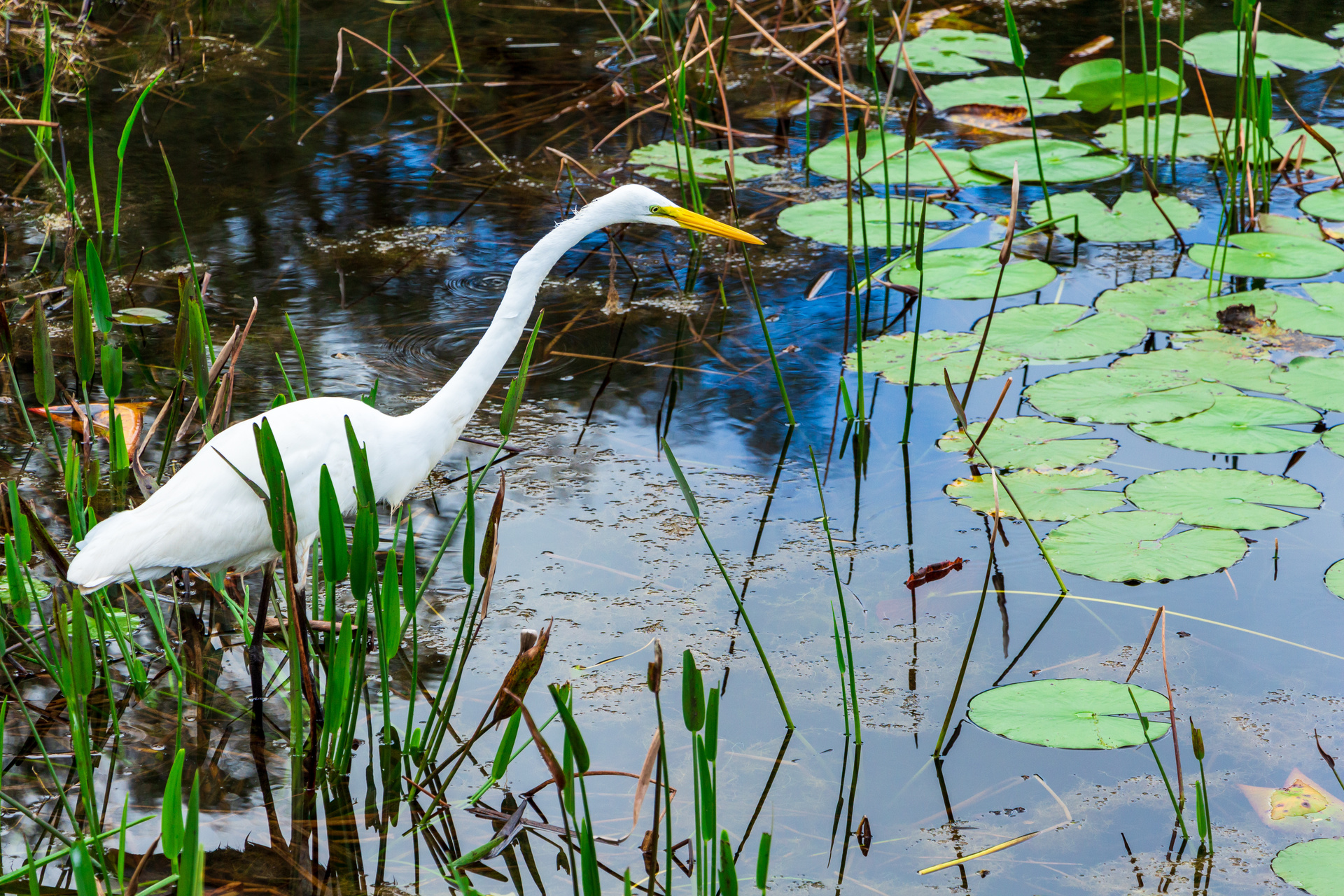
The great egret is another familiar sight throughout Louisiana wetlands. Bright white feathers, long black legs, and a yellow bill distinguish this elegant bird as it quietly stalks fish and small aquatic animals in marshes and bayous. Snowy egrets are also frequently observed, recognizable by their smaller size, black bills, yellow feet, and active feeding behavior.
Louisiana's wetlands also provide habitat for the little blue heron, green heron, and tricolored heron. Each species occupies slightly different feeding areas while contributing to the rich diversity of birdlife found throughout the region.
Anhinga are commonly seen perched with wings spread wide after diving beneath the water to catch fish. Sometimes called the "snake bird" because of its long neck, the anhinga spends much of its time swimming with only its neck visible above the water's surface before climbing onto branches to dry its feathers.
Double-crested cormorants share similar feeding habits, diving beneath the water in search of fish. Groups of cormorants are often observed resting together on fallen logs, pilings, or cypress trees after feeding.
The colorful wood duck is one of the most recognizable waterfowl species in Louisiana's swamps. Males display distinctive iridescent green, purple, and chestnut plumage, while females exhibit more subdued coloring. Unlike many duck species, wood ducks commonly nest in tree cavities near water.
Belted kingfishers are another favorite among wildlife observers. These birds often perch quietly above the water before diving rapidly to capture fish. Their rattling call frequently announces their presence before they become visible.
The barred owl inhabits many wooded swamp areas and is known for its distinctive vocalizations, particularly during early morning and evening hours. These owls rely on mature trees for nesting while hunting small mammals, reptiles, amphibians, and birds beneath the forest canopy.
Red-shouldered hawks are frequently seen soaring above wetlands or perched along forest edges searching for prey. Their broad wings and distinctive calls make them familiar residents throughout much of Louisiana.
The Mississippi kite also appears during warmer months, feeding primarily on flying insects while gliding gracefully above open areas adjacent to swamps and wetlands.
Pileated woodpeckers add another dimension to the swamp environment. These large woodpeckers excavate nesting cavities in dead or dying trees while feeding on insects hidden beneath bark. Their loud drumming often echoes through cypress forests.
Prothonotary warblers are among the most colorful songbirds associated with Louisiana swamps. Bright yellow plumage and preference for wooded wetlands make them popular among birdwatchers during the breeding season.
During migration, many additional species temporarily inhabit Louisiana wetlands. Ducks, shorebirds, songbirds, and raptors use the state's swamps and marshes as resting and feeding areas while traveling along major migration routes connecting North America with wintering grounds farther south.
Seasonal water levels also influence bird activity. Changes in rainfall, river levels, and wetland conditions affect food availability, nesting locations, and species distribution throughout the year. As conditions change, different birds become more or less common in specific areas.
Conservation efforts continue to play an important role in maintaining healthy wetland habitats for Louisiana's bird populations. Wetlands support not only resident species but also millions of migratory birds that depend on these ecosystems during annual migrations.
Birdwatching has become an increasingly popular activity throughout Louisiana because many swamp birds can be observed from boats, boardwalks, wildlife refuges, and protected natural areas. Quiet observation often allows visitors to witness feeding, nesting, and other natural behaviors without disturbing wildlife.
"Many visitors come to Louisiana hoping to see alligators, but they are often surprised by the variety of birds living in the swamps," said Milton Walker Jr., owner of Louisiana Tour Company in New Orleans, Louisiana. "Every season brings different opportunities to observe wading birds, waterfowl, birds of prey, and colorful songbirds that depend on these wetlands throughout the year."
Louisiana's swamps remain one of North America's most important wetland ecosystems. Their diverse habitats continue supporting an extraordinary range of bird species while providing opportunities for residents and visitors alike to observe wildlife in one of the state's most recognizable natural environments.
Morgan Thomas
Rhino Digital, LLC
+1 504-875-5036
email us here
Visit us on social media:
Facebook
Legal Disclaimer:
EIN Presswire provides this news content "as is" without warranty of any kind. We do not accept any responsibility or liability for the accuracy, content, images, videos, licenses, completeness, legality, or reliability of the information contained in this article. If you have any complaints or copyright issues related to this article, kindly contact the author above.
